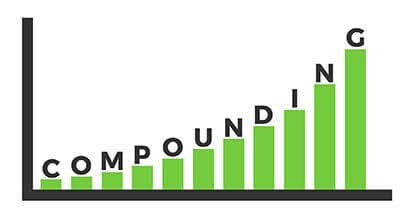
Tax savings present a unique opportunity to invest capital and achieve meaningful growth over time. By investing $300,000 at a conservative annual return of 10%, you can leverage the power of compounding to significantly increase the value of your savings. Let’s explore how this initial amount could grow over a decade and why such opportunities should not be overlooked.
The Mechanics of Compound Growth
Compound growth works by generating returns not only on the initial principal but also on the accumulated earnings. This snowball effect is a key driver for wealth creation over time, making it one of the most powerful forces in finance.
If you invest $300,000 at a 10% annual return, the formula to calculate the future value (FV) is:
FV=P×(1+r)t
Where:
- P = Initial investment ($300,000)
- r = Annual return rate (10% or 0.10)
- t = Time in years (10 years)
After 10 years, the $300,000 investment would grow to $778,110, nearly 2.6 times the original amount.
The Importance of Reinvesting Returns
The $778,110 value assumes all returns are reinvested and allowed to compound. If, instead, some returns are withdrawn each year, the final amount would be considerably less. This highlights the importance of letting investments grow untouched to maximize long-term benefits.
Tax Savings: A Path to Building Wealth
Tax savings can be a hidden reservoir of investment potential. By reinvesting these savings, rather than spending them, you create a wealth-building mechanism that significantly amplifies their value.
For example:
- If you were to save $300,000 from a strategic tax move, investing it at a conservative return rate like 10% could almost double your money in 7 years and grow it by 160% in 10 years.
- These returns underscore the financial power of proactively managing taxes and leveraging savings into investments.
Conclusion: Seizing the Opportunity
The example above illustrates how tax savings, when wisely invested, can transform into significant wealth over time. A 10% annual return is achievable with a balanced investment strategy, especially when combining equity investments, real estate, or other high-performing assets.
By understanding the power of compounding, you can make strategic financial decisions that maximize the long-term value of your assets. If you’ve recently secured tax savings or are planning a wealth management strategy, consider investing those funds to create a strong financial future.


